Artemis: from the hunt to the dance
Hymn 27 moves its goddess from the mountains to Apollo’s house.
Also known as: Artemis
More than a huntress
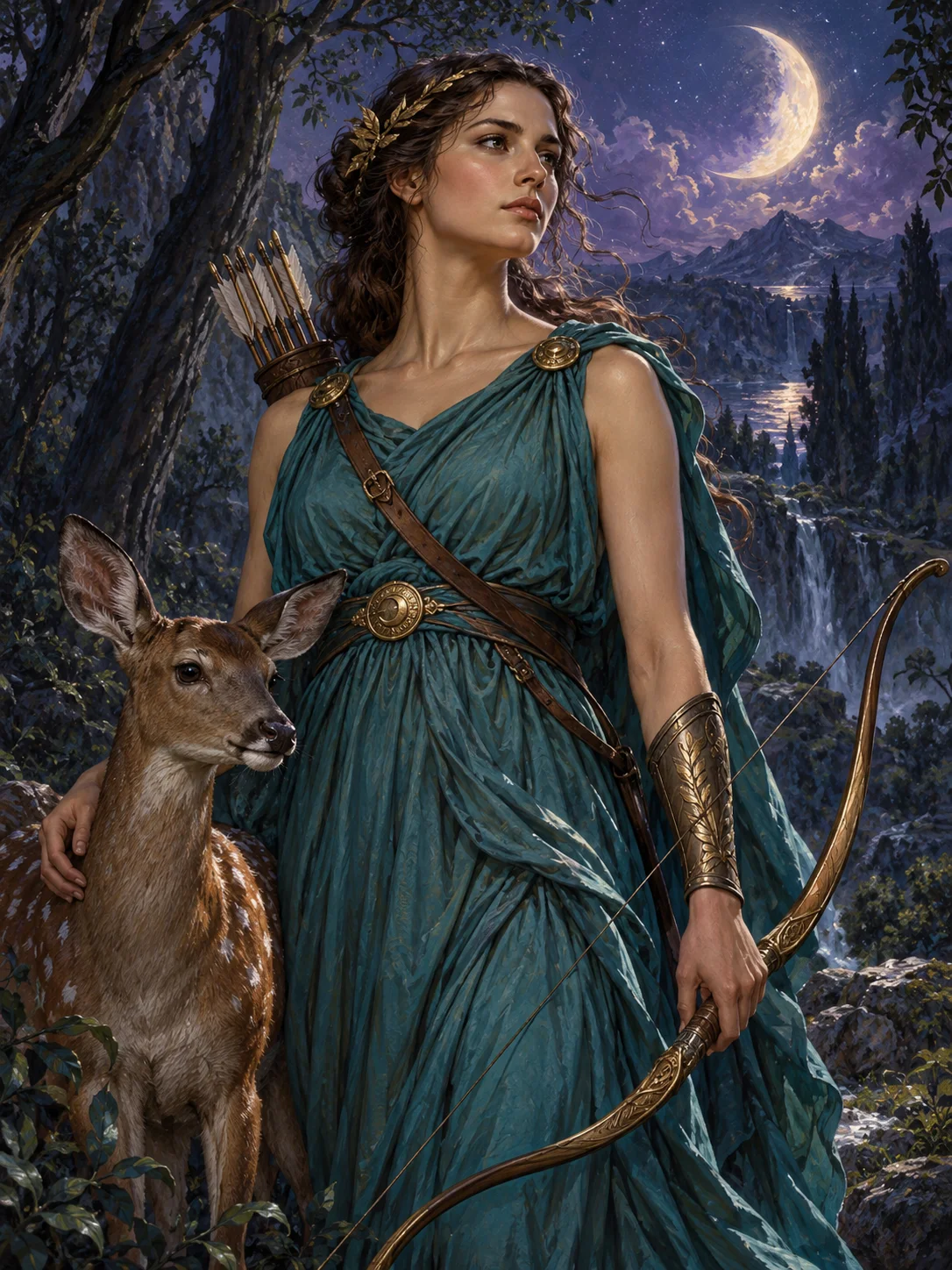
The poem begins with Artemis hunting in the mountains. It then takes her to Delphi, where she puts aside her weapons and leads a dance with the Muses and Graces. Reading both movements preserves more of the poem’s character.
Relations with a source
Its closing lines identify Artemis and Apollo as children of Zeus and Leto. That statement belongs to this named hymn. The illustration’s moon is an artistic symbol, not a detail established by this particular poem.
Claims and evidence
Homeric Hymn 27 moves from hunting to a dance at Delphi
Sources
- Homeric Hymns — Hugh G. Evelyn-White translation
Hymns XXII To Poseidon, XXVII To Artemis, XXVIII To Athena; read each numbered hymn separately.
Source accessed 2026-10-28