Ouranos in Theogony
The sky born from Gaia, and a central figure in the narrative sequence preceding Aphrodite’s emergence.
Also known as: Ouranos · Uranus · ยูเรนัส · อูรานอส
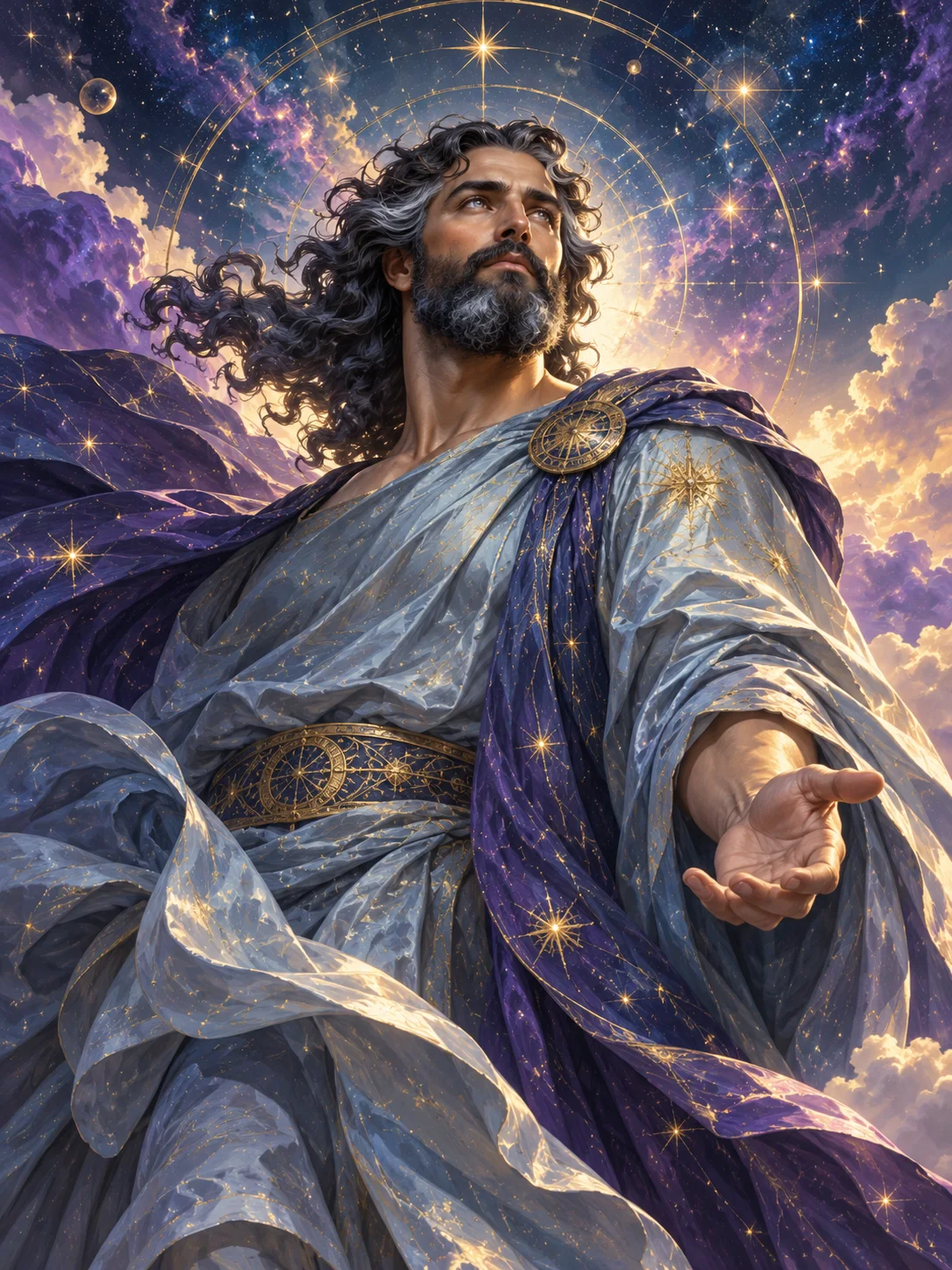
Separating genealogy from a cause of emergence
Beginning around Theogony 126, Gaia brings forth Ouranos, the sky. Their later union is associated with the Titans, including Kronos.
Kronos’s attack on Ouranos leads into Aphrodite’s emergence from sea foam. A simple father–daughter line would flatten the narrative, so the database uses an emergence association for that connection.
Ouranos and Uranus are search aliases here. They do not merge all cultural personifications of the sky into one figure.
Claims and evidence
Gaia brings forth Ouranos in Theogony.
Relationships by source version
Sources
- Hesiod, Theogony — H. G. Evelyn-White (1914)
Theogony 126–138; 176–206
Source accessed 2026-10-28