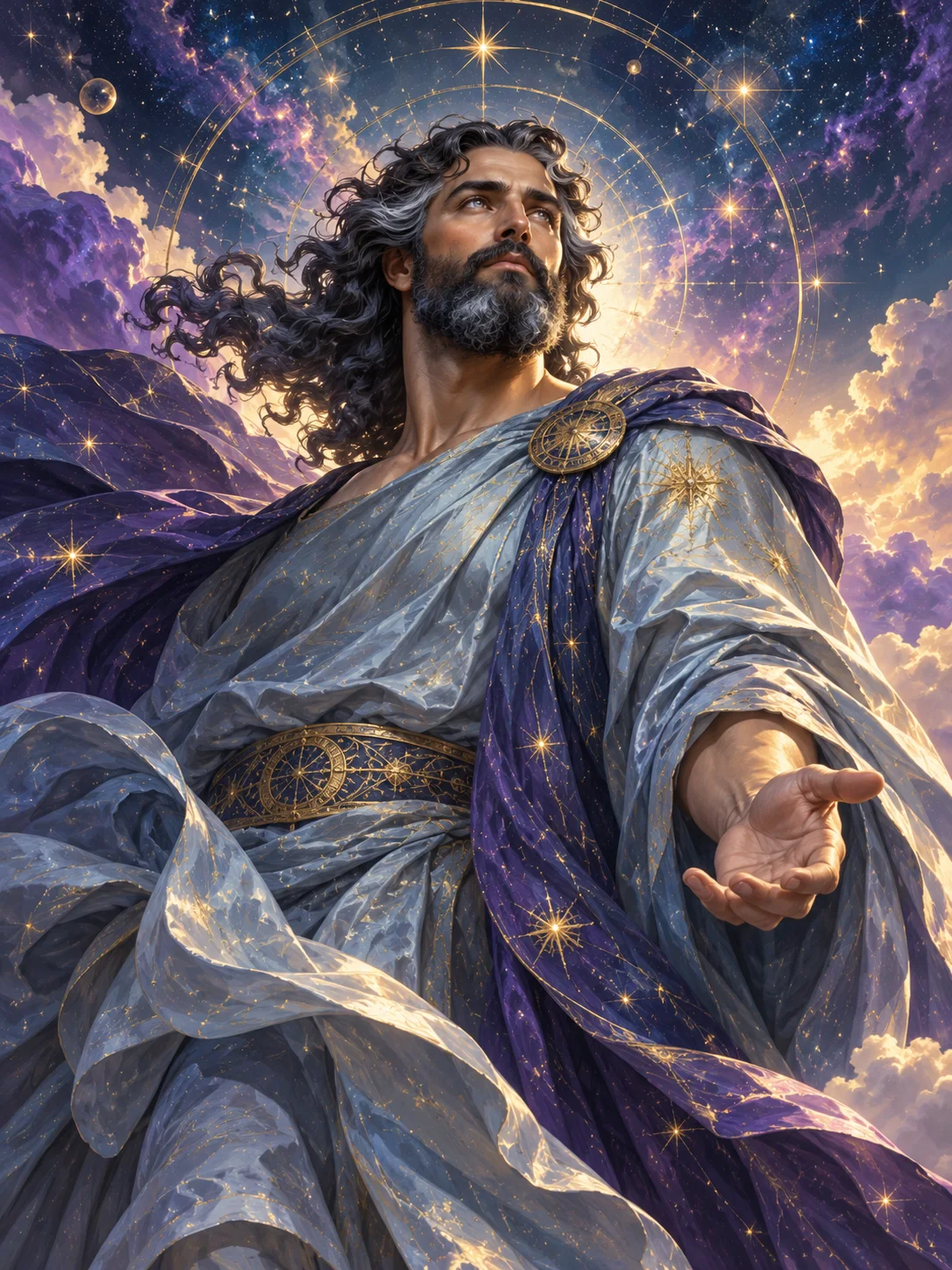
Kronos: between Ouranos and Zeus
Theogony connects Kronos to transitions between divine generations, as a son of Ouranos and father of Zeus.
Also known as: Kronos · Cronos · Cronus · โครนอส · โครนัส
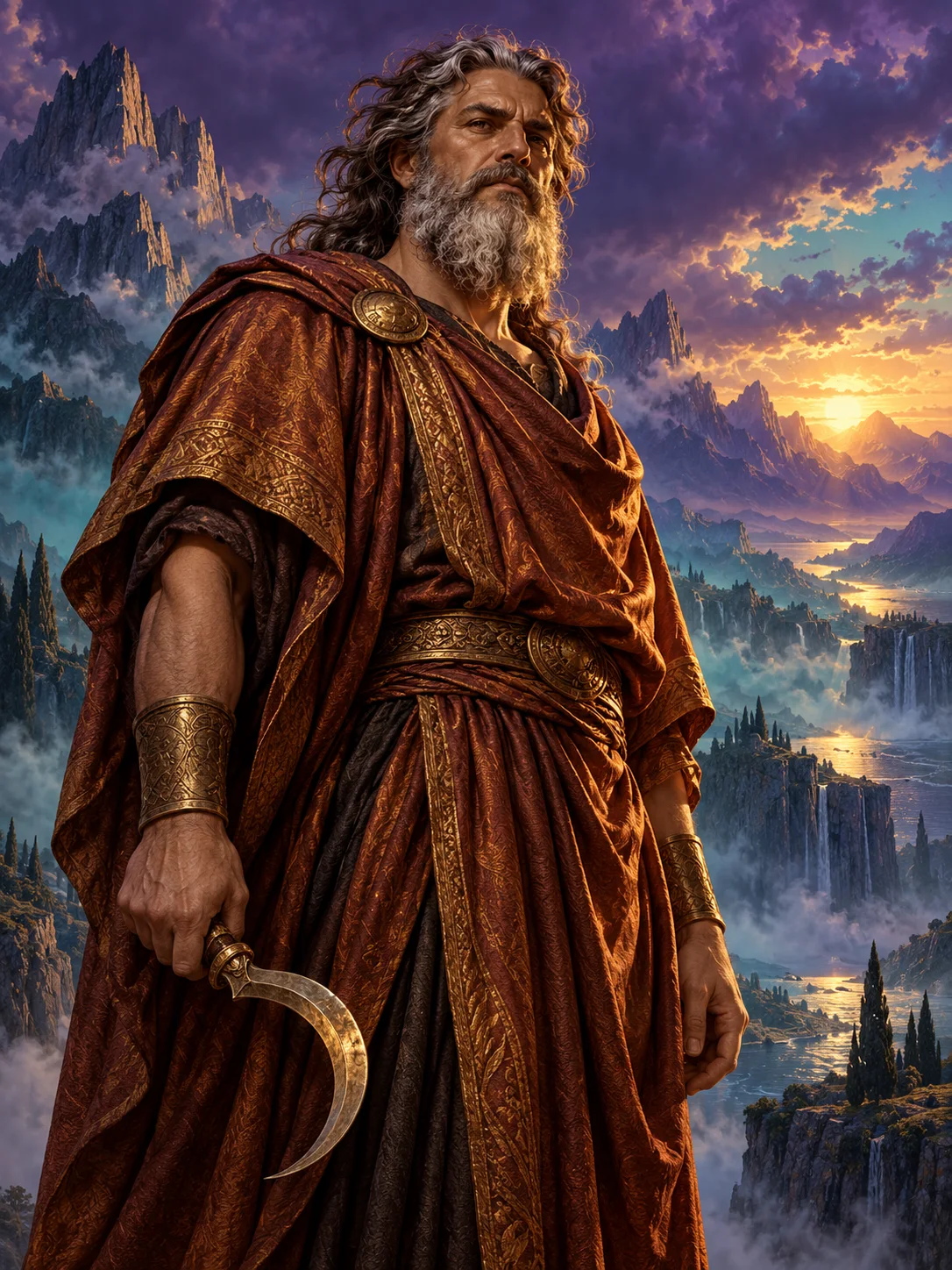
Reading roles within one source
Early in Theogony, Kronos is listed among the children of Gaia and Ouranos. He later attacks Ouranos before the narrative introduces Aphrodite’s emergence.
From line 453, the poem names the children of Rhea and Kronos: Hestia, Demeter, Hera, Hades, Poseidon and Zeus.
The database distinguishes being a child, being a parent and participating in an episode. Appearing in the same passage does not imply the same relationship type.
Claims and evidence
Kronos and Rhea are Zeus’s parents in Theogony.
Relationships by source version
Sources
- Hesiod, Theogony — H. G. Evelyn-White (1914)
Theogony 134–138; 176–206; 453–458
Source accessed 2026-10-28